Modern United States factories must raise output while lowering costs. Leaders use manufacturing erp software systems to streamline complex workflows. These platforms serve as the central nervous system for your entire facility.
These manufacturing erp software systems connect data from the shop floor to the front office. They provide real-time visibility into every process, helping teams manage inventory and production schedules. Our review examines planning, cloud deployment, and business scalability.
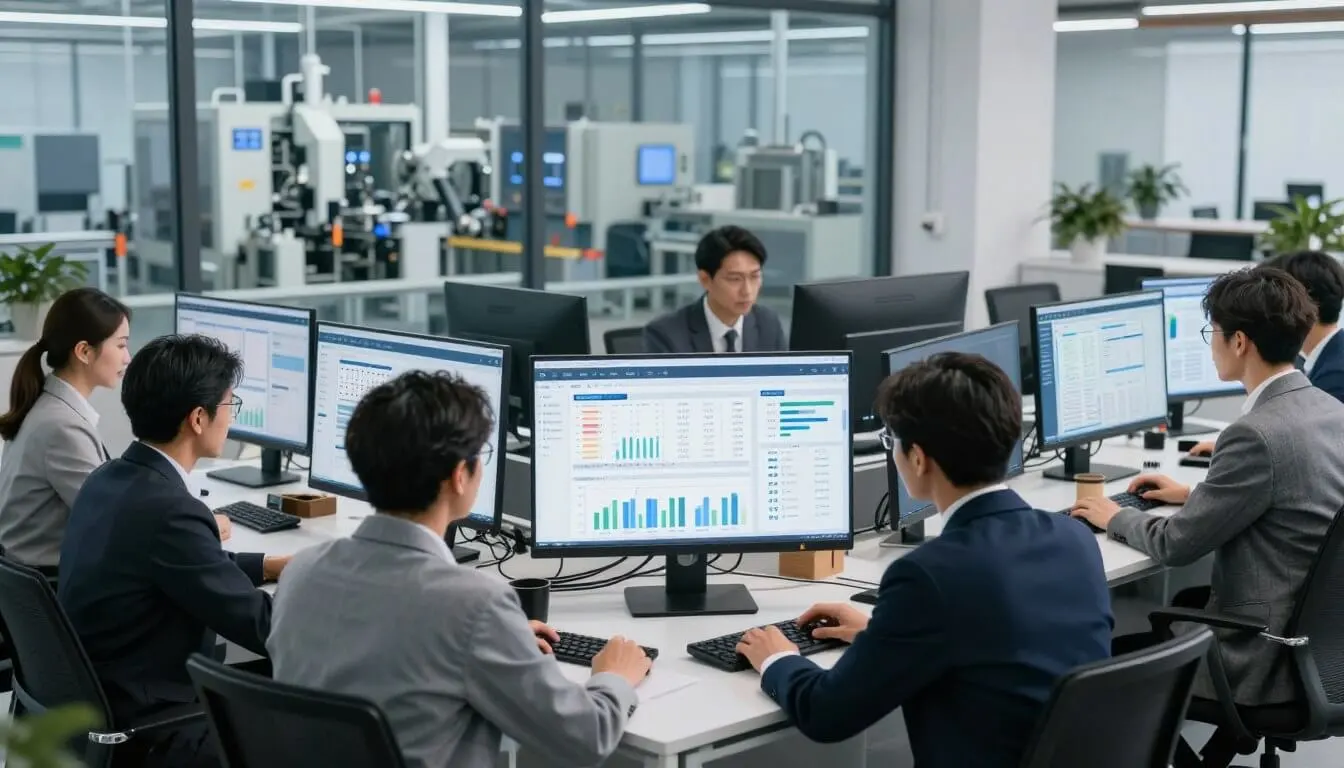
Choosing the correct platform is a critical investment for long-term growth. We examine how different models meet unique business needs and help operations run at peak performance. Explore the best ways to transform your production environment today.
Key Takeaways
- Centralized data improves decision-making across all departments.
- Real-time tracking boosts overall production efficiency and reduces waste.
- Cloud-based deployment offers greater flexibility for growing businesses.
- Seamless integration with existing hardware is vital for success.
- Strategic planning tools help align output with current market demand.
How manufacturing ERP software systems improve production efficiency
The move to digital work starts with adopting manufacturing ERP software systems that connect every part of your business. They break down silos and give decision-makers one trusted source of information.
Connecting finance, operations, inventory, and shop-floor data
These systems connect finance, operations, inventory, and shop-floor data in one place. When financial data links to shop-floor activity, you gain unprecedented visibility into true costs.
Inventory levels update as production uses raw materials. This live connection gives your accounting team accurate data for job costing and financial reports.
Reducing production delays, waste, and manual data entry
Manual data entry often causes errors and slows production. By automating these steps, manufacturing ERP software systems remove redundant spreadsheets and paper tracking.
“Efficiency is doing things right; effectiveness is doing the right things.”
Peter Drucker
Automation cuts waste by ordering materials exactly when needed. Your team spends less time fixing errors and more time on high-value production tasks.
Supporting manufacturers with multi-site and multi-channel operations
Modern production often spans several locations and sales channels. A centralized system can manage inter-company transfers and consolidated reports with ease.
Whether you sell through direct retail, e-commerce, or wholesale, your ERP supports the supply chain. It helps you scale without losing control of inventory or quality standards.
What buyers should expect from a modern ERP for the manufacturing industry
When evaluating manufacturing ERP software systems, buyers should choose agile platforms. A modern solution should provide actionable insights through advanced analytics, not basic record-keeping.
Modern systems should include:
- Cloud-native architecture for easier updates and remote access.
- Real-time dashboards that track key performance indicators.
- Scalable modules that grow alongside your production capacity.
- Seamless integration with existing shop-floor hardware and IoT devices.
Evaluation criteria for the best ERP software for manufacturing firms
Choosing the best ERP software for manufacturing firms is a major decision that can shape long-term growth. Use a clear framework instead of generic feature lists to match the platform to your production environment. This method helps you reject systems that lack the depth needed for complex industrial work.
Manufacturing functionality and industry fit
Factories need more than standard business software. Choose a system with native support for your production mode: discrete, process, or mixed-mode manufacturing. A specialized erp for manufacturing industry solution handles complex bills of materials and routings without heavy custom coding.
Production planning, scheduling, and capacity management
Effective planning drives every production facility. Choose tools with strong finite-capacity scheduling that account for machine downtime and labor availability. This approach sets realistic delivery dates based on actual shop-floor limits, not theoretical capacity.
“Efficiency is doing things right; effectiveness is doing the right things.”
Peter Drucker
Inventory, purchasing, warehouse, and supply chain controls
Your software must offer real-time visibility into raw materials and finished goods. Strong supply chain controls can automate purchases from demand forecasts, which lowers the risk of stockouts or excess inventory. Traceability also supports compliance and quality across the entire supply chain.
Usability, scalability, customization, and total cost of ownership
A system creates value only when your team uses it. Choose intuitive, role-based interfaces that reduce training time for shop-floor workers. Also consider total cost of ownership, including licensing, infrastructure, and long-term maintenance of custom configurations as your business grows.
Implementation support from ERP software providers for manufacturing
Digital transformation often succeeds or fails based on your partner. Assess erp for manufacturing industry providers by their record in data migration, staff training, and ongoing technical support. A strong implementation plan supports a smooth transition and prepares your team to use the system from day one.
Leading manufacturing ERP solutions reviewed
Modern manufacturers face many choices when seeking top manufacturing ERP solutions. The right platform must match your production needs and business goals. This review covers four leading systems that improve operations and business visibility.
Epicor Kinetic
Overview
Epicor Kinetic is built for the manufacturing sector. It offers deep industry tools that help businesses grow and respond to market changes.
Features
The system includes strong tools for production management, supply chain execution, and quality control. Advanced analytics track shop-floor performance in real time.
Pros
Specialized manufacturing modules reduce the need for customization. Its modern, intuitive interface supports user adoption across the plant.
Cons
The system’s depth can create a steep learning curve for new users. Implementation may take longer than with lighter, cloud-only alternatives.
Recommendations
This solution suits mid-to-large sized manufacturers with complex discrete production needs. It fits firms that value industry-specific tools over general-purpose features.
Conclusion
Epicor Kinetic is a powerful choice for manufacturers needing a complete, industry-focused ERP system.
Infor CloudSuite Industrial
Overview
Infor CloudSuite Industrial, also called Syteline, supports complex manufacturing operations in the cloud. It handles intricate supply chains and demanding production schedules.
Features
Key features include advanced planning, scheduling, quality management, and financial controls. The system also manages complex bills of materials for diverse product lines.
Pros
The platform scales well and supports multi-site operations. Its cloud design delivers updates without disrupting production.
Cons
Ownership costs may be high for smaller businesses. Some users need significant training to master its reporting tools.
Recommendations
We recommend it for industrial machinery, aerospace, and automotive manufacturers. It suits companies managing complex, high-volume production cycles.
Conclusion
Infor offers a reliable, high-performance solution for manufacturers expanding their global operations.
Microsoft Dynamics 365 Supply Chain Management
Overview
Microsoft Dynamics 365 connects manufacturing with wider business functions. Its Microsoft cloud foundation provides strong data connectivity.
Features
The system offers AI-driven insights, predictive maintenance, and Office 365 integration. It also supports warehouse and transportation management.
Pros
Its familiar interface makes adoption easier and connects well with Microsoft products. Companies can customize it to create unique workflows.
Cons
The platform’s complexity may require a dedicated implementation partner. Licensing costs can rise as the user base grows.
Recommendations
It fits organizations already using the Microsoft stack. It also suits companies seeking a flexible, connected digital environment.
Conclusion
Dynamics 365 helps modern manufacturers use data and AI to gain a competitive advantage.
Oracle NetSuite Manufacturing Edition
Overview
Oracle NetSuite is a cloud-native ERP for managing an entire manufacturing business. It suits growing companies that need fast deployment.
Features
It includes work order management, assembly builds, and demand planning. The system provides real-time views of inventory and financial performance.
Pros
Its cloud-native design supports quick implementation and lower initial infrastructure costs. Users can access it from any internet-connected device.
Cons
It may lack the specialized shop-floor tools found in traditional manufacturing ERPs. Complex, multi-plant operations may need additional third-party modules.
Recommendations
This option suits small to mid-market manufacturers seeking a modern, agile system. It helps companies move away from legacy on-premises software.
Conclusion
NetSuite offers growing manufacturing firms a streamlined path to digital transformation.
| ERP Solution | Best For | Primary Strength | Deployment |
| Epicor Kinetic | Complex Discrete | Industry Depth | Hybrid/Cloud |
| Infor CloudSuite | Industrial/Global | Scalability | Cloud |
| Microsoft D365 | Connected Enterprise | Integration | Cloud |
| Oracle NetSuite | Growing Mid-Market | Agility | Cloud |
Choosing among these top manufacturing ERP solutions depends on your company size and production complexity. Review your long-term goals before selecting a platform that supports growth.
Production planning and manufacturing resource planning software capabilities
Modern factories need digital tools to coordinate complex workflows and stay competitive. Manufacturing resource planning software connects materials, labor, and machine capacity with customer demand.
Material requirements planning and bill-of-materials management
Every production system must manage raw materials and complex product structures. Bill-of-materials (BOM) management defines each component needed for every finished good. Automated lists help procurement teams order each part on time.
Advanced manufacturing resource planning software uses BOMs to support material requirements planning (MRP). MRP calculates net requirements from inventory levels and open purchase orders. It helps prevent stockouts while reducing excess inventory costs.
Finite-capacity scheduling and work-center management
Production schedules often fail when they overlook real-world limits. Finite-capacity scheduling considers available machines, tools, and personnel at each work center. This prevents unrealistic production timelines caused by overcommitted resources.
Work-center load views help managers spot bottlenecks before they disrupt the shop floor. Managers can shift tasks or move staff to high-priority jobs. This keeps production at its maximum potential without placing extra stress on equipment.
Job costing, labor tracking, and production reporting
Knowing production costs helps companies protect healthy profit margins. Integrated software tracks labor hours, machine time, and material use for every job. This detailed data compares actual costs with estimated costs.
Detailed production reports help leaders study performance trends over time. These metrics can reveal problems in specific processes or departments. This data-driven approach supports continuous improvement across the organization.
Make-to-stock, make-to-order, engineer-to-order, and mixed-mode production
Different business models need different planning strategies. Whether a firm makes standard goods or custom projects, the software must meet those needs.
| Production Strategy | Primary Focus | Planning Driver |
| Make-to-Stock | Inventory availability | Sales forecasts |
| Make-to-Order | Customer demand | Confirmed sales orders |
| Engineer-to-Order | Custom specifications | Project milestones |
| Mixed-Mode | Hybrid flexibility | Combined demand signals |
How planning accuracy affects throughput and on-time delivery
Accurate planning data helps companies meet customer expectations. When manufacturing resource planning software is configured correctly, information flows from sales to shipping. This alignment increases throughput and reduces lead times.
Accurate planning helps every department pursue the same goals. Reliable, real-time data reduces the chance of errors. It supports consistent on-time delivery, customer satisfaction, and business growth.
Inventory, quality, and supply chain management features
Today’s market requires manufacturers to control their supply chains and material quality. Advanced manufacturing supply chain software connects internal processes with supplier capabilities. This link keeps production lines running and cuts the cost of excess inventory.
Real-time inventory visibility across plants and warehouses
Modern systems create one trusted view of stock across many locations. With an inventory management ERP, managers can see current stock counts, work-in-progress items, and finished goods in real time. This view helps prevent over-ordering and missed customer demand caused by hidden stockouts.
Lot, serial, shelf-life, and traceability controls
Regulatory rules and safety standards often require detailed tracking of every production component. Using specialized inventory traceability software, manufacturers can record lot numbers, serial identifiers, and expiration dates. This detail matters in food, beverage, and medical device manufacturing, where safety is paramount.
Quality inspections, nonconformance management, and corrective actions
Strong manufacturing quality management helps ensure every product meets strict internal and external specifications. When workers find a defect, the system creates a nonconformance report and isolates the issue at once. This approach helps teams take corrective action before faulty products reach customers.
- Automated inspection triggers at receiving and production stages.
- Digital documentation of nonconformance events for audit readiness.
- Root cause analysis tools to prevent recurring quality failures.
Purchasing automation, supplier performance, and demand forecasting
Efficient procurement depends on accurate data, not guesswork. Using manufacturing supply chain software, companies can automate purchase orders from real-time demand signals. These systems also track supplier performance, including lead time reliability and quality scores, to guide sourcing decisions.
Managing shortages, excess stock, and production material risk
Balancing inventory is a constant challenge for production planners. An effective inventory management ERP helps find material shortages before they stop the shop floor. It also flags slow-moving items, preventing excess stock from tying up valuable capital.
By linking manufacturing quality management with supply chain tools, firms can reduce risks from volatile material availability. Advanced inventory traceability software helps ensure the right materials are always available at the right time. This unified approach builds resilient production that can adapt to market shifts.
Cloud-based ERP software for manufacturing and deployment choices
Choosing a deployment model for manufacturing software affects long-term growth. Whether you choose modern cloud-based ERP software for manufacturing or a traditional setup, the choice shapes daily data use. Each path offers different levels of control, cost, and access.
Benefits of SaaS deployment for growing manufacturers
Software-as-a-Service (SaaS) models support fast deployment and lower startup costs. Growing firms often choose this approach because it scales with production volume. Automatic updates keep your business on the latest version without help from IT staff.
Private cloud, on-premises, and hybrid ERP considerations
Some organizations need more control over data and infrastructure than a public cloud provides. A private cloud offers a dedicated environment, while on-premises solutions keep data inside your facility. Many manufacturers choose a hybrid model to balance cloud flexibility with local server security.
Security, backups, uptime, and disaster recovery requirements
Reliability supports every production facility. Whatever the deployment, you need strong disaster recovery plans to prevent data loss. Cloud providers often promise high uptime, but verify security protocols that protect sensitive intellectual property.
When a cloud deployment may not suit specialized production environments
While cloud-based ERP software for manufacturing is effective, it may not fit every situation. Facilities with poor internet or ultra-low latency needs for machine-to-machine communication may face performance issues. Highly regulated industries may also need local hosting because of strict data residency rules.
Subscription pricing, user licensing, and infrastructure costs
Understanding total ownership costs is essential for budget planning. SaaS models usually charge recurring fees by user count, while on-premises systems need upfront costs for hardware and perpetual licenses. Compare these operating expenses with the capital costs of maintaining your own server rooms.
| Deployment Model | Upfront Cost | Maintenance | Control Level |
| SaaS (Public Cloud) | Low | Vendor Managed | Limited |
| Private Cloud | Moderate | Shared/Internal | High |
| On-Premises | High | Internal IT | Maximum |
| Hybrid | Variable | Mixed | Balanced |
Integrations and customization for an integrated ERP system for manufacturers
An integrated ERP system for manufacturers serves as your business’s central nervous system. It breaks down data silos and unites operations, from the front office to the shipping dock. Every department then works from one trusted source of truth.
Connecting ERP with CRM, accounting, payroll, and human resources
Modern production facilities benefit when financial and administrative data flows smoothly into the core ERP. Connecting Customer Relationship Management (CRM) software lets sales teams see real-time production status and inventory before promising client delivery dates.
Linking payroll and human resources modules also records labor costs accurately for specific production jobs. This automated data synchronization removes manual entry errors and gives leaders clear insight into operational profitability.
Shop-floor systems, machine data, MES, and industrial IoT integration
True digital transformation needs clear visibility into the factory’s core operations. Connecting ERP to Manufacturing Execution Systems (MES) and Industrial IoT (IIoT) sensors gives real-time insight into machine performance and downtime.
“The future of manufacturing lies in the ability to turn raw machine data into actionable intelligence that drives continuous improvement.”
This connection updates schedules automatically using actual machine output. If a sensor detects possible failure, the system can alert maintenance teams early and prevent costly production halts.
E-commerce, EDI, transportation, and warehouse management connections
Expanding your reach requires strong connections with supply chain partners and digital storefronts. Electronic Data Interchange (EDI) remains vital for large retailers and automotive suppliers. It processes purchase orders and shipping notices without human help.
- E-commerce platforms: Sync web orders directly to production queues.
- Transportation management: Automate freight scheduling and tracking.
- Warehouse management: Optimize picking, packing, and inventory replenishment.
APIs, low-code tools, workflows, and reporting extensions
Every business has unique processes that standard software may not support out of the box. Modern platforms provide APIs and low-code tools, helping IT teams build custom workflows without changing core code. These extensions help software grow with each business’s needs.
Balancing a customizable ERP solution for the manufacturing sector with upgradeability
Choosing a customizable ERP solution for the manufacturing sector requires a careful balance between flexibility and long-term stability. Too much core-code customization can create “technical debt,” which makes future updates and security patches harder to apply.
Use configuration over customization whenever possible. Built-in extension frameworks let you tailor the system while keeping the platform fully upgradeable for years.
User experience, analytics, and operational visibility
Giving workers the right data at the right time can transform daily work at your facility. Modern systems make complex information clear and useful for every team member. Clear, fast data helps organizations turn facts into smart action.
Role-based dashboards for executives, planners, buyers, and supervisors
Effective software platforms use role-based ERP dashboards to show information for each job. An executive might view high-level financial trends, while a shop-floor supervisor needs quick access to machine status and labor hours. This approach limits distractions and helps users focus on their main duties.
Real-time production, cost, delivery, and inventory KPIs
Achieving real-time manufacturing visibility helps companies stay competitive in today’s fast-moving market. By tracking cycle times, unit costs, and on-time delivery rates, managers can spot bottlenecks before they hurt profits. Constant monitoring helps teams adjust production schedules and resource use quickly.
Mobile access for warehouse and shop-floor employees
A mobile manufacturing ERP solution brings system tools beyond the office. Warehouse staff can scan inventory items in real-time, while shop-floor operators update job statuses from their workstations. This mobility cuts paperwork and keeps the central database current.
Embedded analytics, forecasting, alerts, and exception management
Advanced manufacturing ERP analytics support proactive management instead of reactive firefighting. Embedded tools let users create forecasts from past trends and current demand signals. Automated alerts also flag exceptions, such as material shortages or quality failures, for immediate corrective action.
Data quality and adoption factors that influence ERP results
Every digital investment depends on accurate underlying information. If input data is flawed, reports and forecasts can cause poor decisions. Organizations must prioritize data integrity and invest in comprehensive training to ensure high user adoption across all departments.
Implementation, migration, and change management considerations
Implementing modern production technology takes clear goals and careful execution. Success requires matching business processes with your chosen platform. Experienced erp software providers for manufacturing can help your digital transformation support long-term growth and stable operations.
Defining production, financial, and compliance requirements
Before installing software, document your specific operational needs. Map current production workflows, financial reports, and industry compliance requirements. Clear records prevent scope creep and keep system settings aligned with your business.
Preparing bills of materials, routings, item masters, and customer data
Data integrity supports a successful system migration. Clean and validate existing records before importing them into the new environment. Prioritize these key data sets:
- Bills of Materials (BOMs): Ensure multi-level structures are accurate and up to date.
- Routings: Verify that machine times and labor sequences reflect current shop-floor practices.
- Item Masters: Standardize naming conventions and units of measure across all facilities.
- Customer Data: Cleanse contact information and historical order profiles for better analytics.
Phased rollout versus company-wide implementation
Choosing the right deployment strategy helps minimize operational disruption. A phased rollout allows you to stabilize one site or department before moving to the next, which reduces risk. Conversely, a company-wide implementation offers faster enterprise-wide visibility but requires significantly more resources and change management effort.
Training planners, operators, managers, and finance teams
Technology works only as well as the people using it. Develop role-based training programs for your staff’s specific needs. Empowering your team through hands-on workshops improves adoption and speeds time-to-value.
Testing integrations, workflows, reporting, and production scenarios
Rigorous testing confirms that the system handles real-world production challenges. Simulate daily tasks, including order entry, material shortages, and month-end financial closing. Working with professional erp software providers for manufacturing during this phase helps find workflow bottlenecks before they affect your bottom line.
Common implementation risks and ways to control them
Common risks include poor data quality, limited user training, and weak executive support. Reduce these risks by creating a dedicated project steering committee. This group should hold erp software providers for manufacturing accountable for meeting milestones and delivering the expected return on investment.
Which manufacturing ERP solution fits different business needs
Selecting the right software starts with a clear view of your production environment. Each platform has different strengths, so your choice must match your operating model. Reviewing manufacturing erp software systems against your workflows helps support growth.
Best fit for complex discrete and mixed-mode manufacturers
Complex assemblies need strong engineering change control and detailed bill-of-materials support. Solutions like Epicor Kinetic offer flexible production modes for repetitive and custom project work. They support make-to-stock and engineer-to-order workflows without losing data integrity.
Best fit for process manufacturers and formula-driven production
Food, beverage, and chemical producers need precise recipes and strict regulatory compliance. Your software must track lot numbers, shelf life, and ingredient potency accurately. Infor CloudSuite Industrial provides tools for these formula-driven requirements.
Best fit for Microsoft-centered organizations and multi-site operations
If your company uses Microsoft products, a native solution may offer the simplest path. Microsoft Dynamics 365 Supply Chain Management connects seamlessly with Office 365 and Azure services. This link simplifies data sharing across global sites and shortens staff training.
Best fit for growing small and midsize manufacturers seeking faster deployment
Smaller firms often seek fast value and lower upfront infrastructure costs. Oracle NetSuite Manufacturing Edition suits these businesses because it is cloud-native and scalable. Teams can add core functions quickly, then add advanced modules as they grow.
Questions to ask ERP software providers for manufacturing before signing
Before choosing a vendor, complete careful due diligence. Ask how their manufacturing erp software systems address bottlenecks in your production line. Ask about their long-term roadmap and support plans as volume grows.
Comparing demonstrations, references, support models, and five-year value
Focus live demonstrations on your use cases, not generic features. Request references from companies in your industry to check real-world results. Calculate five-year total ownership costs, including subscription and maintenance fees, for sustainable spending.
| Business Profile | Primary Strength | Recommended Focus |
| Complex Discrete | Engineering & BOM Control | Flexibility & Scalability |
| Process/Formula | Compliance & Traceability | Quality & Lot Tracking |
| Microsoft-Centric | Ecosystem Integration | Global Multi-site Sync |
| Small/Midsize | Rapid Deployment | Cloud-Native Efficiency |
Conclusion
Modern production success depends on a digital foundation that matches your operational goals. Whether you value Epicor Kinetic’s deep industry tools or Oracle NetSuite Manufacturing Edition’s cloud-native flexibility, your choice shapes long-term growth.
Microsoft Dynamics 365 Supply Chain Management and Infor CloudSuite Industrial connect shop-floor reality to executive strategy. These platforms provide the visibility needed to manage complex inventory, quality standards, and resource planning with precision.
Your path to digital transformation requires a clear assessment of current readiness and future scalability needs. Focus on how well a system fits existing workflows and supports your team during transition. The right software partner boosts efficiency by turning raw data into actionable insights for better decisions.
Evaluate these solutions by how well they adapt to your unique production environment. A well-planned implementation strategy helps your investment deliver measurable value for years. Take time to review your requirements against these industry leaders to secure a competitive edge in today’s fast-paced market.
FAQ
What are the primary benefits of implementing manufacturing ERP software systems in a modern facility?
Manufacturing ERP software systems act as a facility’s central nervous system, connecting finance, operations, and shop-floor data in real time. This integration can significantly reduce production delays, manual data-entry errors, and material waste. It also supports multi-site operations and gives firms visibility into complex global supply chains.
How does an ERP for the manufacturing industry improve production planning and scheduling?
A robust ERP for the manufacturing industry includes advanced manufacturing resource planning (MRP) tools for material requirements and bill-of-materials (BOM) management. Finite-capacity scheduling prevents work centers from becoming overloaded and helps managers balance labor and machine availability. This accuracy improves throughput and raises on-time delivery rates for customers.
What are the top manufacturing ERP solutions currently available for United States businesses?
For United States businesses, several high-performance options meet different needs, including Epicor Kinetic’s deep discrete manufacturing functionality. Infor CloudSuite Industrial supports complex process and mixed-mode production. Microsoft Dynamics 365 Supply Chain Management suits Microsoft ecosystems, while Oracle NetSuite Manufacturing Edition scales for growing midsize firms.
Why should a business consider cloud-based ERP software for manufacturing over traditional on-premises setups?
Cloud-based ERP software for manufacturing offers greater scalability and lower upfront infrastructure costs through a SaaS deployment model. It provides automatic updates, strong disaster recovery, and high uptime for 24/7 production environments. Specialized plants may need hybrid setups for local machine control, but cloud systems improve access for shop-floor and warehouse employees.
What features define the best ERP software for manufacturing firms focused on quality and compliance?
The best erp software for manufacturing firms needs traceability controls, including lot and serial number tracking, to meet strict regulatory standards. Essential features include quality inspection modules, nonconformance management, and automated corrective actions. These tools ensure teams identify and mitigate material risks or production defects before products reach end users.
How does an integrated ERP system for manufacturers handle diverse production modes?
An integrated ERP system for manufacturers supports make-to-stock (MTS), make-to-order (MTO), and engineer-to-order (ETO) production. By combining these modes, one platform tracks job costing, labor hours, and customer requirements for formula-based or assembly-driven production.
Is it possible to find a customizable ERP solution for the manufacturing sector that remains easy to upgrade?
Yes, modern platforms create a customizable ERP solution for the manufacturing sector through APIs, low-code tools, and flexible workflows. Unlike legacy systems, which often caused “version lock,” Oracle NetSuite and Epicor allow significant dashboard and report tailoring. These changes do not prevent regular software updates.
What should I evaluate when comparing different ERP software providers for manufacturing?
When evaluating ERP software providers for manufacturing, look beyond the feature list. Assess implementation support, industry-specific references, and data-migration experience with complex item masters and routings. Success depends on providers’ ability to offer a clear five-year value proposition and phased rollout strategy that limits operational disruption.
How do real-time analytics and KPIs within an ERP system drive better decision-making?
Modern ERPs provide role-based dashboards for executives, planners, and supervisors, showing real-time Key Performance Indicators (KPIs). These include overall equipment effectiveness (OEE) and inventory turnover; embedded analytics and automated alerts reveal bottlenecks or material shortages instantly. Managers can then shift from reactive problem-solving to proactive exception management.